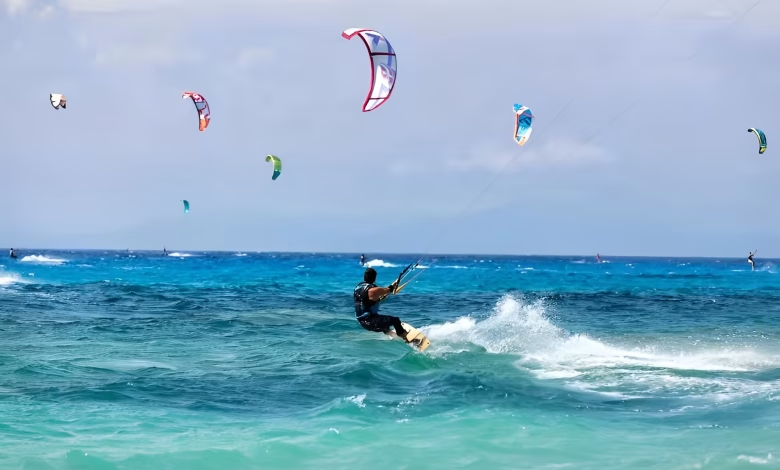
Nobody looks graceful in their first few hours of kitesurfing. That is worth saying up front, because the images you see online, all spray and airtime, can set some slightly unrealistic expectations. The reality of week one is a lot of standing in shallow water, a fair bit of getting dragged sideways, and the occasional moment of pure magic when things suddenly click. If you go in knowing that, you will have a far better time.
It starts on land, not in the water
Every good lesson begins away from the board entirely. Before you touch a full sized kite you will spend time understanding the wind window, learning how the kite generates power depending on where you steer it, and getting comfortable with the safety systems. It can feel like a slow start when you are itching to get wet, but this is the foundation everything else is built on. Riders who rush this stage tend to pay for it later.
Once the theory makes sense, you move to a trainer kite or a controlled setup where you can feel the pull without being overpowered. This is where muscle memory starts forming. Steering the kite smoothly, keeping it parked in one spot, and generating power on demand all become second nature long before you ever stand on a board.
The water start is the hard bit, and that is normal
The body drag comes next, learning to let the kite pull you through the water and recover your board. Then comes the water start, which is genuinely the steepest part of the learning curve. You will crash. A lot. Everyone does. The trick is to treat each attempt as information rather than failure, and to trust that your body is learning even when your brain feels like it is not.
This is exactly why a shallow, forgiving location matters so much for beginners. Somewhere you can stand up hundreds of metres from shore takes a huge amount of stress out of those early attempts. You are not fighting waves, you are not worried about depth, and you can reset quickly between tries. That environment can genuinely halve the time it takes to get riding.
The choice of school shapes your first week just as much as the spot does. Good instruction keeps every session structured and safe, which is why it is worth taking your beginner kitesurf lessons in Portugal with a team that teaches complete newcomers day in and day out rather than trying to piece it together from videos and borrowed gear.
What to actually expect by day five
Be realistic and be patient. By the end of a focused week, most people can water start and ride short distances in at least one direction. Riding upwind, the thing that makes you truly independent, usually comes a little later, often in a second block of lessons. That is completely normal and not a sign you are behind.
The riders who improve fastest are almost never the most athletic ones. They are the ones who stay relaxed, listen to their instructor, and do not let a run of crashes get in their head. Kitesurfing rewards patience far more than raw strength. Bring that mindset to your first week and you will walk off the beach hooked, sunburnt in the bits you missed, and already thinking about the next session.